What is a Reclining Wheelchair and Who Needs One?
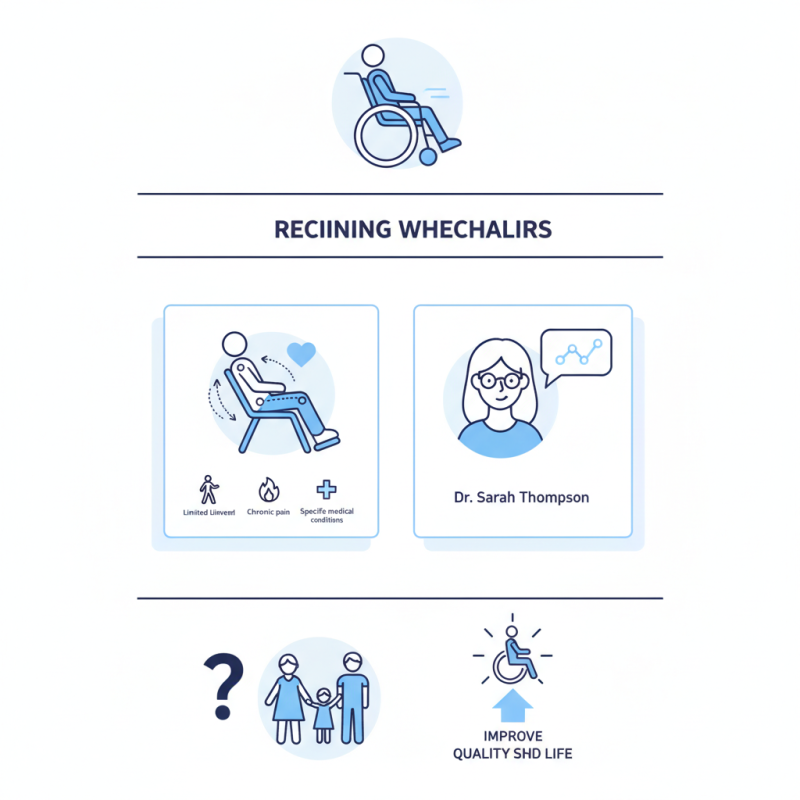
In today's world, mobility is a crucial aspect of daily life for many individuals. A Reclining Wheelchair is specially designed to provide comfort and support for those who need it most. Dr. Sarah Thompson, a leading expert in mobility solutions, states, "Reclining wheelchairs transform the way users experience mobility, offering both dignity and comfort."
These wheelchairs serve various needs. They are essential for individuals with limited mobility, chronic pain, or specific medical conditions. These users often require the ability to change positions comfortably throughout the day. A reclining feature allows for better pressure relief and prevents discomfort during extended use.
However, there's still a gap in awareness. Many people are unaware of how a Reclining Wheelchair could enhance their quality of life. Families may overlook this option when seeking mobility aids. It’s important to consider the unique needs of each user and how a wheelchair can support them. As we explore this topic further, we hope to shed light on the benefits and importance of Reclining Wheelchairs for those who truly need them.
What is a Reclining Wheelchair?
A reclining wheelchair is designed to offer comfort and support to users who need to spend extended periods in a seated position. This type of wheelchair allows the backrest to tilt backward, enabling users to recline at different angles. The feature helps redistribute pressure, reducing the risk of pressure sores for those with limited mobility. By adjusting the angle, users can find a position that alleviates discomfort or pain.
Many individuals might benefit from a reclining wheelchair, especially those with severe disabilities, chronic pain, or post-surgery recovery needs. For example, someone recovering from a spinal surgery may find relief in a reclining position. However, it's essential to recognize that not every user will need this type of chair. Some might feel overwhelmed by the mechanics or find it hard to adjust.
Choosing the right wheelchair is a personal experience. What works for one person might not work for another. It's crucial to assess needs carefully. Consulting with healthcare professionals is always a smart step. Yet, not everyone feels comfortable discussing their requirements. This hesitation can lead to users missing out on critical support. Taking the time to explore various options can make a significant difference.
Key Features of Reclining Wheelchairs
Reclining wheelchairs are designed to offer comfort and support for users who need it most. They are equipped with adjustable backrests and footrests that allow for various seating positions. This feature is crucial for individuals with certain medical conditions. According to a report by the Wheelchair Users Coalition, about 30% of wheelchair users experience pressure sores. Reclining options can help alleviate this issue.
Key features of reclining wheelchairs include padded seating and adjustable components. Many models have extra cushioning to enhance comfort during extended use. Additionally, some chairs offer tilt-in-space capabilities, which redistribute weight and reduce pressure on specific body areas. Data indicates that 25% of wheelchair users struggle with body positioning. This makes the ergonomic design of reclining chairs vital.
Accessibility is also an important factor. A recent survey revealed that nearly 40% of consumers seek reclining options for their care. These users prioritize functionality but can feel overwhelmed by choices. There isn’t a one-size-fits-all solution. The hunt for the right wheelchair can often lead to frustration. Each user has unique needs and preferences. Finding the right balance between features and comfort remains a challenge.
Usage of Reclining Wheelchairs Among Different Age Groups
Who Can Benefit from Using a Reclining Wheelchair?
Reclining wheelchairs are designed for individuals who need extra support. They provide comfort and relief for those with limited mobility. Many users may suffer from conditions such as spinal cord injuries, muscular dystrophy, or severe arthritis. According to a report by the National Institute of Health, about 24% of adults with mobility issues could benefit from reclining wheelchairs.
Individuals recovering from surgery often require these chairs. They help in pressure relief, preventing bedsores. Patients with respiratory issues also find reclining positions beneficial. Studies show that sitting at an incline can improve lung function and oxygen intake.
Tips: Consider the weight capacity of the wheelchair before purchasing. Look for models that offer adjustable features. Always consult with healthcare professionals to determine individual needs. Emphasizing comfort is crucial; not all users have the same requirements.
Many caregivers may overlook the importance of a reclining feature. It’s vital for long-term health. Regular assessments are necessary to ensure the wheelchair meets the user's changing needs. The right wheelchair can enhance independence and quality of life.
Differences Between Standard and Reclining Wheelchairs
Reclining wheelchairs are designed for users who need extra comfort and support. They allow the user to change position easily. This is particularly beneficial for people who spend long hours in a chair. These chairs can help improve circulation and reduce pressure sores.
Standard wheelchairs provide a fixed seating position. They are typically lighter and easier to maneuver. However, this can lead to discomfort for some users. On the other hand, reclining wheelchairs can adjust the angle of the backrest. This makes it easier to adapt to various needs throughout the day.
The choice between the two types often involves personal preference. Some users may feel confined in a standard chair. Others might feel overwhelmed by the options in reclining models. It is essential for users to find a chair that suits their lifestyle. Sometimes, trying both options can provide better insights into what works best.
Factors to Consider When Choosing a Reclining Wheelchair
When choosing a reclining wheelchair, several factors play a crucial role. Comfort is paramount, especially for individuals with limited mobility. According to the National Institute of Health, about 54% of wheelchair users experience discomfort. A reclining feature allows better weight distribution, reducing the risk of pressure sores. The chair’s adjustability affects how well it meets a user's needs.
Weight capacity is another important consideration. Many models support between 250 to 500 pounds. Selecting a chair with the right capacity prevents potential accidents. Furthermore, the chair’s size should match the user's body. A poorly fitting chair can lead to strain and injuries over time.
Ease of use matters too. Controls should be intuitive. Some users struggle with complex mechanisms. Durability is another concern. A chair is a significant investment. Reports indicate that nearly 30% of users replace their wheelchairs within three years due to wear and tear. This highlights the need for a quality build. Choose wisely, and consider all these factors carefully.