Top Stem Cell Types and Their Applications in Medicine?
Stem cell research has revolutionized medicine, offering hope for treating a variety of conditions. Leading experts like Dr. Robert Lanza emphasize the significance of this field. He once stated, "Stem cells have the potential to change the way we treat diseases." This highlights the promising nature of cell stem cell research.
The exploration of different types of stem cells reveals their vast applications. Embryonic stem cells, for instance, can develop into any cell type. Their potential in regenerative medicine is astonishing. Adult stem cells, although more limited, provide essential insights into tissue repair. The versatility of these cell stem cell types shows immense potential for future therapies.
Nevertheless, challenges remain in harnessing this technology. Ethical concerns and technical limitations often hinder progress. As we delve deeper into the mechanisms of cell stem cells, reflection on these obstacles is crucial. The potential is vast, but the path forward requires careful consideration and responsible innovation.
Types of Stem Cells: An Overview of Classifications and Characteristics
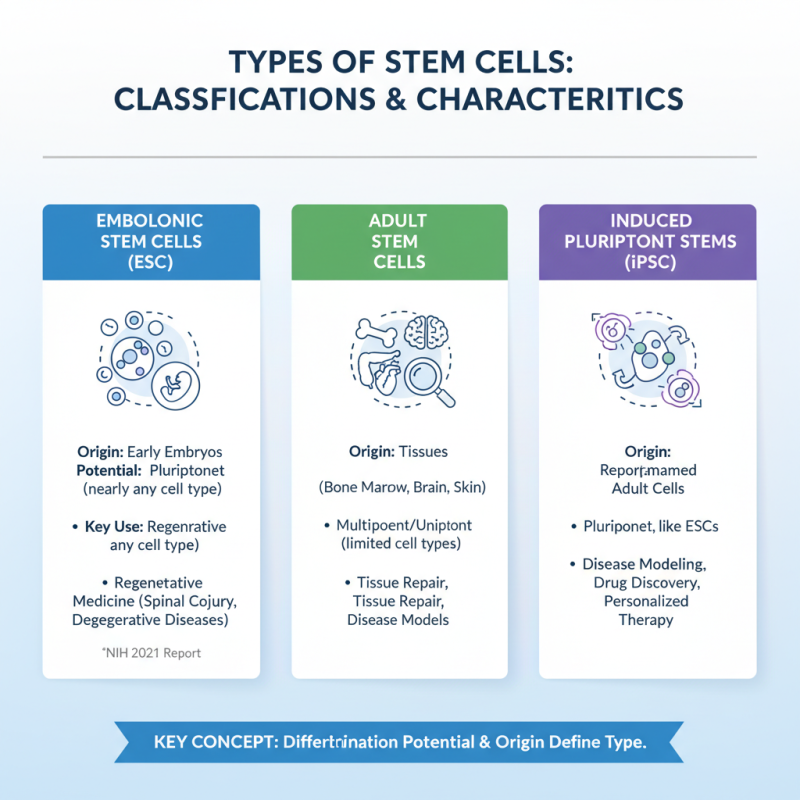
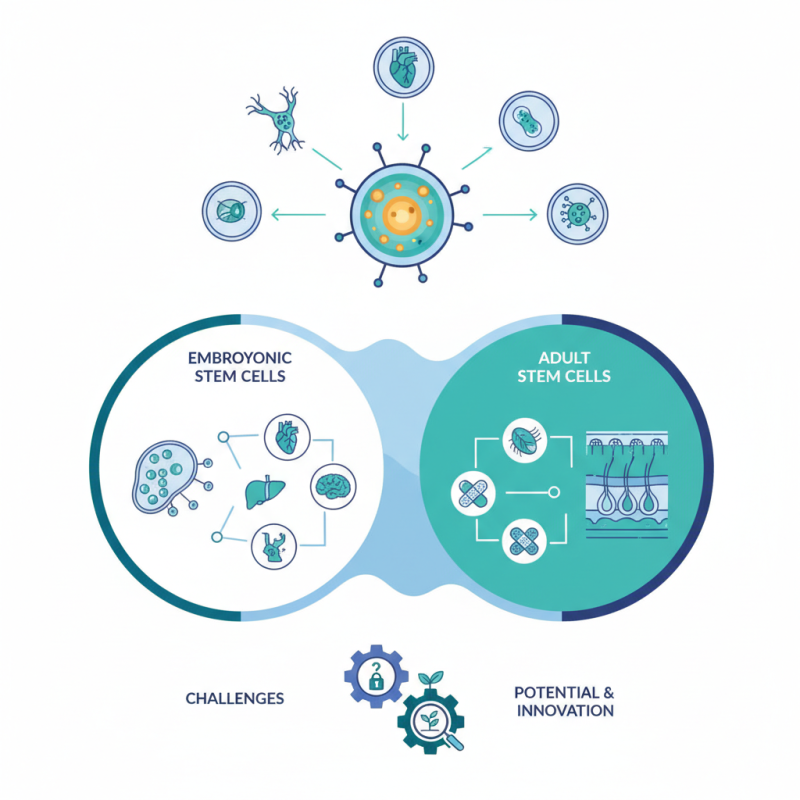
Stem cells are classified into various types based on their origin and differentiation potential. Among these, the most notable are embryonic stem cells, adult stem cells, and induced pluripotent stem cells (iPSCs). Embryonic stem cells (ESCs) are derived from early embryos and possess pluripotent capabilities. They can differentiate into nearly any cell type, making them invaluable for regenerative medicine. According to a 2021 report by the National Institutes of Health, ESCs have shown promise in treating conditions such as spinal cord injuries and degenerative diseases.
Adult stem cells, on the other hand, are found in specific tissues like bone marrow or fat. Their differentiation capability is limited compared to ESCs. However, they play critical roles in tissue repair and regeneration. A study in the *Journal of Cell Biology* points out that adult stem cells can help repair damage from strokes and promote healing after heart attacks.
Induced pluripotent stem cells (iPSCs) offer a bridge between ESCs and adult stem cells. They are created by reprogramming adult cells, allowing them to behave like stem cells. This innovation presents exciting possibilities. Yet, ethical concerns and the risk of tumor formation remain significant challenges. The field must navigate these issues carefully, ensuring that research advances safely and effectively. Researchers continue to investigate the optimal use of these stem cell types in various medical therapies.
Embryonic Stem Cells: Potentials and Ethical Considerations in Research
Embryonic stem cells (ESCs) hold immense potential for advancing medical science. These cells can develop into any cell type in the body. Their pluripotent nature allows researchers to study various diseases and test new medications effectively. For example, ESCs can be used to create neurons for Alzheimer's research or heart cells for cardiovascular studies. The possibilities are exciting.
However, ethical considerations arise when working with embryonic stem cells. The process of obtaining these cells involves the destruction of an embryo, which many view as controversial. This raises questions about the moral status of the embryo. Balancing scientific progress with ethical concerns is crucial. Researchers must navigate these waters carefully, considering both the potential benefits and moral implications of their work.
As science advances, open dialogues about ethics are necessary. Researchers need to communicate openly with the public about their methods and the values behind their work. Transparency builds trust and encourages responsible research practices. It's vital to reflect on where we draw the line between innovation and ethics in embryonic stem cell research.
Stem Cell Types and Their Applications in Medicine
Adult Stem Cells: Sources, Types, and Medical Applications
Adult stem cells are an exciting area of research in medicine. They can be found in various tissues, including bone marrow, fat, and even skin. These versatile cells can transform into many different cell types, making them invaluable for regenerative medicine.
One significant application of adult stem cells is in treating blood disorders. For instance, hematopoietic stem cells from bone marrow can help patients recover from conditions like leukemia. Moreover, mesenchymal stem cells are gaining attention for their potential to repair damaged tissues in conditions like osteoarthritis.
**Tips:** Consider the ethical implications of using stem cells in research. It’s essential to stay informed about the latest advancements. Understanding the varied sources of adult stem cells helps in recognizing their diverse uses.
However, challenges remain. Research is ongoing to fully understand their capabilities. Many scientists question the efficiency of these cells in various treatments. This reflects a need for ongoing investigation into optimizing their use in clinical therapies. Overall, adult stem cells hold promise but also require careful study and ethical consideration.
Induced Pluripotent Stem Cells: Revolutionizing Regenerative Medicine
Induced pluripotent stem cells (iPSCs) are transforming regenerative medicine. These cells can become any cell type in the body, offering a way to repair damaged tissues. Research indicates that iPSCs may alleviate diseases such as Parkinson's and heart disease. A report from the International Society for Stem Cell Research states that iPSCs could enable organ regeneration, which remains a significant challenge today.
The versatility of iPSCs presents both opportunities and challenges. Their ability to differentiate into various cell types raises ethical questions and potential risks of tumor formation. Data from recent studies suggest that around 30% of iPSC-derived therapies face complications during clinical translation. Researchers must address these hurdles to ensure the safety and efficacy of treatments. More rigorous protocols are necessary to evaluate the long-term effects of iPSC therapies.
Understanding the nuances of iPSC technologies is crucial for advancing medical applications. Continuous research is essential to overcome existing limitations. Improved methodologies may enhance our ability to harness the full potential of iPSCs in clinical settings.
Top Stem Cell Types and Their Applications in Medicine
| Stem Cell Type |
Source |
Differentiation Potential |
Applications in Medicine |
| Embryonic Stem Cells (ESCs) |
Blastocyst stage embryos |
Pluripotent |
Tissue regeneration, Research in development |
| Adult Stem Cells |
Bone marrow, Adipose tissue |
Multipotent |
Blood disorders, Tissue repair |
| Induced Pluripotent Stem Cells (iPSCs) |
Somatic cells through reprogramming |
Pluripotent |
Regenerative medicine, Disease modeling |
| Mesenchymal Stem Cells (MSCs) |
Bone marrow, Fat tissue |
Multipotent |
Bone, cartilage, and fat tissue regeneration |
| Hematopoietic Stem Cells (HSCs) |
Bone marrow, Blood |
Multipotent |
Blood cell production, Transplantation therapies |
Current and Future Applications of Stem Cells in Disease Treatment
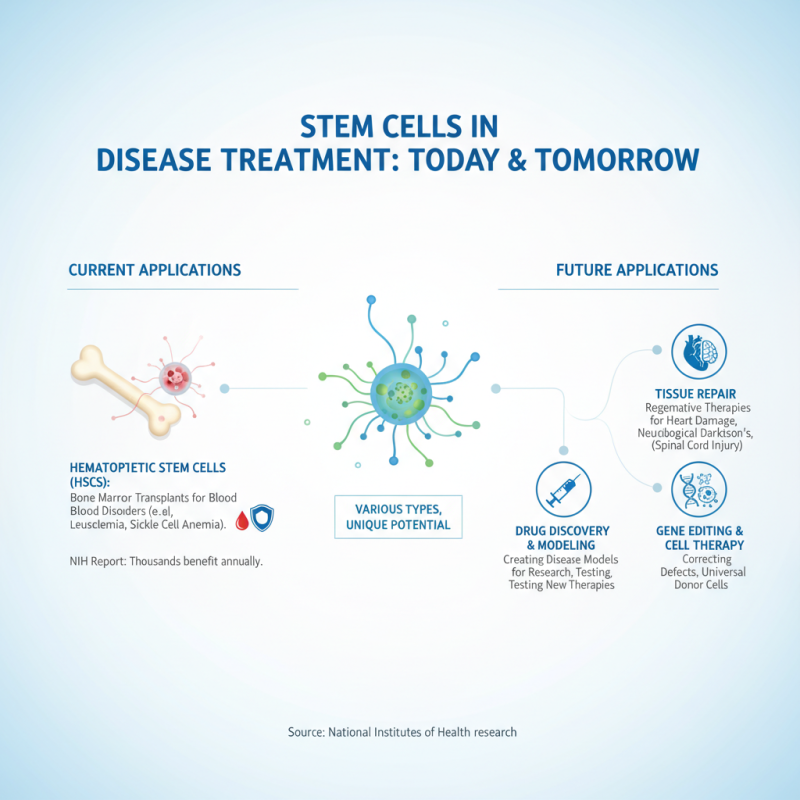
Stem cells have emerged as powerful tools in modern medicine. Research indicates that there are various types of stem cells, each offering unique applications. For instance, hematopoietic stem cells (HSCs) are primarily used in treating blood disorders. A report from the National Institutes of Health highlights that they are vital for bone marrow transplants, benefiting thousands annually.
Another promising area is the use of mesenchymal stem cells (MSCs). These cells can differentiate into a variety of cell types, making them ideal for regenerative medicine. MSCs have shown potential in treating conditions like osteoarthritis, with studies suggesting significant pain reduction in over 70% of treated patients. However, researchers still face challenges, such as standardizing treatment protocols and understanding long-term effects.
Neural stem cells (NSCs) offer hope for neurodegenerative diseases. Early-stage research suggests that NSCs might repair damaged neural tissues in conditions like Parkinson's disease. Despite their promise, results remain mixed, urging the need for more controlled clinical trials. The diverse applications of stem cells reveal both potential and uncertainty, encouraging ongoing exploration in this dynamic field.