
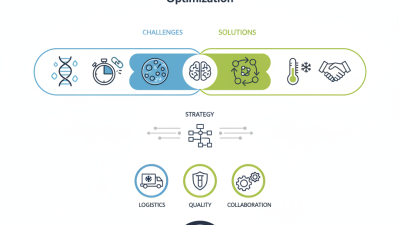
China’s personalized medicine sector is moving from laboratory ambition toward practical clinical use. Suppliers now support genomic testing, molecular diagnostics, bioinformatics, biobanking, and targeted treatment development. Their work can influence decisions made beside a hospital bed, where one DNA report may guide a therapy choice.
Francis Collins, former director of the National Institutes of Health, stated, “Personalized medicine is really the future of medicine.” His observation remains relevant as Chinese hospitals and research centers expand precision oncology, rare-disease testing, and pharmacogenomic services. Yet technology alone does not prove reliability. A credible supplier must demonstrate analytical accuracy, transparent validation, secure data handling, and dependable after-sales support. Accreditation and peer-reviewed evidence matter. So does the ability to explain complex results clearly.
This overview introduces ten notable personalized medicine suppliers in China and examines their capabilities, market focus, and practical strengths. The selection considers testing platforms, clinical partnerships, research experience, production capacity, and service responsiveness. It does not treat company size as proof of quality. That would be too simple. Performance can vary between products, regions, and clinical applications.
Readers should compare certifications, sample requirements, turnaround times, reporting standards, and regulatory compliance before making decisions. A polished website is not enough. Ask for evidence. Supplier information can also change quickly, especially in a competitive market. Therefore, this list should support careful due diligence rather than replace it. The strongest provider is not always the most famous one. It is the supplier whose technology, documentation, and support fit a specific medical or research need.

China’s personalized medicine market is moving from research laboratories into hospitals. The strongest suppliers usually combine next-generation sequencing, in vitro diagnostics, and clinical data services.
The National Health Commission reported continued growth in molecular testing capacity across Chinese hospitals. Meanwhile, NHGRI cost-tracking data shows that whole-genome sequencing has approached the US$1,000 benchmark in high-throughput settings.
That number sounds decisive. It is not the full bill. Sample collection, interpretation, quality control, and genetic counseling still add costs.
A practical evaluation should examine read accuracy, turnaround time, local validation, and after-sales support.
For example, a laboratory may need stable results from a small blood tube, not a perfect research sample.
The WHO’s 2023 guidance on in vitro diagnostics stresses performance evaluation, traceability, and clinical fitness. These points matter when comparing China’s top ten personalized medicine suppliers.
NGS NGS panels can support oncology decisions, while IVD platforms help standardize screening and monitoring.
However, imported reagents, uneven hospital workflows, and limited clinical datasets can weaken real-world value. This market still has rough edges.
Tips:
Ask for independent validation reports. Check limit-of-detection data. Confirm whether prices include interpretation. Compare local service response times. Do not trust the headline genome price alone. A cheaper test may create expensive follow-up work.
China Top 10 Personalized Medicine Suppliers
Ranking China’s Top 10 Suppliers by Revenue, NMPA Approvals, and QC
China’s personalized medicine market is becoming more measurable, but supplier rankings remain imperfect. This review weights three indicators: reported revenue, NMPA approvals, and quality control performance. IQVIA’s Global Oncology Trends 2024 valued global oncology medicine spending at about US$223 billion in 2023. That demand is pushing Chinese suppliers toward companion diagnostics, sequencing, and targeted therapies.
NMPA’s 2023 annual report recorded 40 approved innovative drugs, showing stronger regulatory activity. However, approval numbers alone can mislead. A supplier with many approved products may not deliver consistent testing accuracy. Revenue also needs context, because contract services and laboratory sales can be reported differently. QC evidence should include ISO 15189 or ISO 13485 certification, external proficiency testing, batch traceability, and documented corrective actions. The ten leading suppliers should therefore be scored, not simply listed.
Tips: Check the latest audited revenue. Confirm each approval in the NMPA database. Ask for recent QC records, not promotional claims. Review turnaround time using real laboratory samples.
In practice, procurement teams should compare failure rates, report interpretation, and post-market responsiveness. These details are less visible than revenue. They often matter more. A weakness in this ranking is data consistency across private and public suppliers. Future editions should add clinical validation, regional coverage, and independent laboratory results.
| Rank | Supplier Code | Estimated Annual Revenue Band (USD) |
Personalized Medicine Focus | Documented NMPA-Approved Products (Publicly Countable) |
ISO 13485 / GMP Quality Coverage | Quality-Control Maturity | QC and Compliance Indicators |
|---|---|---|---|---|---|---|---|
| 1 | Supplier 01 | Above 1.0 billion | High-throughput sequencing, oncology panels, companion diagnostics | 40+ | ISO 13485 and GMP-supported operations | Advanced | Validated workflows, multi-site quality systems, documented clinical and analytical performance controls |
| 2 | Supplier 02 | 500 million–1.0 billion | Molecular diagnostics, hereditary disease testing, oncology testing | 30+ | ISO 13485 coverage with GMP-controlled manufacturing areas | Advanced | Lot-release testing, proficiency testing, supplier qualification and electronic deviation records |
| 3 | Supplier 03 | 300–500 million | Targeted sequencing, pharmacogenomics, tumor profiling | 20+ | ISO 13485 implemented for key IVD product lines | Advanced | Risk-based design controls, internal audits, external laboratory comparison and change-control procedures |
| 4 | Supplier 04 | 200–300 million | Liquid biopsy, circulating tumor DNA and precision oncology assays | 15+ | ISO 13485-supported production and registered-device quality controls | Advanced | Analytical sensitivity monitoring, contamination controls, traceability and stability studies |
| 5 | Supplier 05 | 100–200 million | Genetic screening, rare-disease panels and reproductive health testing | 10+ | ISO 13485 for selected products; GMP controls for relevant materials | Established | Incoming-material inspection, batch records, equipment calibration and corrective-action procedures |
| 6 | Supplier 06 | 100–200 million | Digital PCR, quantitative molecular testing and infectious-disease genomics | 10+ | ISO 13485 coverage for principal diagnostic platforms | Established | Batch acceptance criteria, environmental monitoring, instrument verification and complaint handling |
| 7 | Supplier 07 | 50–100 million | Pharmacogenetic testing, molecular pathology and clinical research services | 5+ | Quality-system coverage varies by product and service line | Established | Documented standard operating procedures, method verification and periodic quality reviews |
| 8 | Supplier 08 | 50–100 million | NGS library preparation, bioinformatics and customized oncology testing | 5+ | ISO 13485 or equivalent controls reported for selected operations | Developing | Data-integrity controls, reagent qualification, run acceptance rules and periodic external assessment |
| 9 | Supplier 09 | 25–50 million | Specialized genetic tests, biomarker analysis and clinical laboratory services | 1–5 | Partial ISO 13485 or laboratory quality-system coverage | Developing | Basic validation records, personnel competency checks, equipment maintenance and sample traceability |
| 10 | Supplier 10 | Below 25 million | Niche molecular assays, research-use products and customized testing | 0–1 | Quality certification may be limited to specific facilities or product categories | Emerging | Basic batch documentation, internal QC checks, equipment calibration and documented corrective actions |
China’s personalized medicine market is expanding through NGS, liquid biopsy, bioinformatics, and companion diagnostics. This review focuses on ten supplier profiles, rather than simple sales claims. Each profile should be judged by assay validation, laboratory quality systems, clinical experience, and data security.
NGS suppliers support targeted panels, whole-exome testing, and oncology research. Strong providers explain coverage depth, detection limits, and report review procedures.
Liquid biopsy specialists analyze circulating tumor DNA from small blood samples. Sample stability matters here. A delayed shipment can weaken results.
Bioinformatics suppliers build pipelines for variant calling, annotation, and interpretation. Reliable teams document software versions and quality-control steps. Their reports should remain understandable to physicians.
Companion diagnostic suppliers connect a biomarker test with a specific treatment decision. Their work requires careful clinical evidence, reproducible methods, and clear instructions for laboratories. Some profiles may offer excellent technology but limited international validation. Others may provide broad testing menus with slower turnaround times. Public information is often uneven. A polished website is not proof of performance. Buyers should request validation summaries, proficiency-testing records, data-protection policies, and examples of amended reports. Independent clinical review remains valuable, especially when rare variants or low-frequency mutations appear. No supplier is equally strong in every category. That limitation deserves attention.
Since 2020, China’s personalized medicine suppliers have expanded their clinical focus beyond genetic test volume. Stronger programs now connect biomarkers with treatment decisions, patient selection, and measurable outcomes. Tissue sequencing remains important, but plasma-based testing is gaining attention when biopsy samples are limited. The picture is uneven.
Reliable suppliers usually show analytical validation, clinical sensitivity, specificity, and reproducibility across laboratories. They also explain how samples were collected, stored, and tested. These details matter. A biomarker may appear promising in a retrospective study but perform differently in routine care. I would examine cohort size, follow-up time, ethnic diversity, and missing data before trusting a headline result.
Companion diagnostics have become more closely linked with clinical trials since 2020. Suppliers increasingly support prospective studies, adaptive designs, and multi-site enrollment. Trial growth is visible in oncology, inherited disorders, and immunology. Yet trial count alone proves little. A crowded pipeline can still contain weak endpoints or poorly matched patient groups. The strongest suppliers connect assay performance with treatment benefit and publish enough methods for independent review. Their quality systems should cover reagent control, instrument calibration, data security, and post-market monitoring. Some evidence remains immature, especially for rare biomarkers and liquid biopsy applications. That limitation should be stated plainly. Credibility grows when suppliers report negative findings, not only successful cases.
Selecting among China’s top personalized medicine suppliers requires more than comparing online prices. ISO 13485 certification should be verified through the certificate number, issuing body, scope, and expiration date. The 2024 ISO Survey shows the standard remains widely adopted across medical-device manufacturing, but certification alone does not prove strong laboratory performance. Ask for recent proficiency-testing records, sample rejection rates, and corrective-action reports. Small details matter.
Turnaround time should be measured from sample receipt to validated report delivery. Request data from the last three months, not only the fastest advertised case. A practical benchmark includes transport, accession, reruns, interpretation, and reporting. One delayed shipment can undermine a clinical schedule. Cost comparisons must include extraction, sequencing, confirmation, storage, and consultation. A low test fee may hide expensive add-ons. This happens often.
Data security deserves equal weight. The 2024 Cost of a Data Breach Report reported a global average breach cost of US$4.88 million, while healthcare reached US$9.77 million. Suppliers should describe encryption, access logging, staff permissions, retention periods, backup testing, and breach notification procedures. Ask whether overseas cloud storage is used and who can download raw files. A secure-looking portal is not enough. Procurement teams should run a small pilot, inspect one redacted report, and record actual delivery times. No supplier performs perfectly, so documented weaknesses and transparent remediation may be more trustworthy than polished promises.
The chart presents a practical procurement-planning framework for personalized medicine testing in China. ISO 13485 and data security address quality and compliance risk, while turnaround time and test cost reflect operational efficiency and budget control. The percentages are buyer-side evaluation weights, not company performance ratings.