Top Endothelial Cell Lines for Research and Applications?
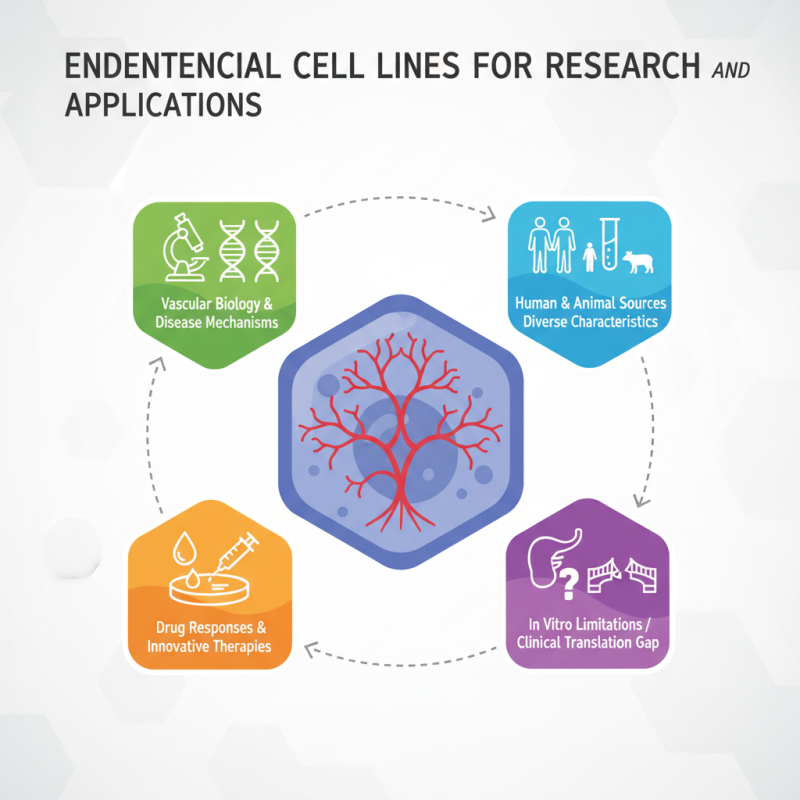
Endothelial cell lines are crucial for various research applications. They help in studying vascular biology, drug responses, and disease mechanisms. These cell lines provide a platform for innovative therapies and biomaterial testing.
Different endothelial cell lines offer unique characteristics. Some are derived from human tissues, while others come from animal sources. This diversity impacts experimental outcomes and may lead to varying results across studies. It is essential to choose the right cell line for specific research objectives.
Researchers must also recognize the limitations of endothelial cell lines. They may not fully mimic in vivo conditions. This gap can lead to discrepancies in translating findings to clinical scenarios. Thus, critical thinking in selecting and utilizing these cell lines is necessary for future advancements.
Overview of Endothelial Cells and Their Importance in Research
Endothelial cells line the blood vessels and play a key role in maintaining vascular health. They regulate blood flow, control inflammation, and facilitate exchanges between blood and tissues. The importance of these cells in research cannot be understated. They serve as crucial models for studying cardiovascular diseases, cancer, and diabetes. Scientists rely on endothelial cell lines to understand cellular behaviors and responses to various treatments.
Researchers often use specific endothelial cell lines to mimic in vivo conditions. These cells help to elucidate the mechanisms of vascular permeability and angiogenesis. By studying these processes, new therapeutic strategies could emerge. However, not all cell lines perfectly replicate the properties of primary endothelial cells. Some researchers might overlook this, leading to misleading results.
Incorporating endothelial cells into biomedical research presents both opportunities and challenges. The varying behaviors of different cell lines can complicate experiments. Inconsistencies in results may arise when comparing studies using distinct endothelial lines. It's essential to critically evaluate the chosen cell line's relevance to the research question. This mindfulness is vital to derive meaningful conclusions from endothelial cell studies.
Commonly Used Endothelial Cell Lines and Their Characteristics
Endothelial cells are crucial for studying vascular biology. Various cell lines are commonly used in research. Each line has unique characteristics, making them suitable for different applications.
One widely used line is Human Umbilical Vein Endothelial Cells (HUVECs). They are isolated from the umbilical cord and are relatively easy to culture. However, HUVECs have a limited lifespan, which can be a challenge for long-term studies. Another popular option is Human Microvascular Endothelial Cells (HMECs), derived from human skin. They retain many in vivo-like characteristics and are ideal for studying microvascular environments. Yet, they can be more difficult to maintain.
Rat aortic endothelial cells (RAECs) are also utilized in research, especially in studies focusing on rat models. They provide insights into cardiovascular diseases. However, their applicability to human biology can sometimes be questioned. Even with these cell lines, researchers face difficulties regarding consistent results across experiments. Each cell line has its strengths and weaknesses, prompting continuous evaluation and adaptation in research methodologies.
Applications of Endothelial Cell Lines in Biomedical Research
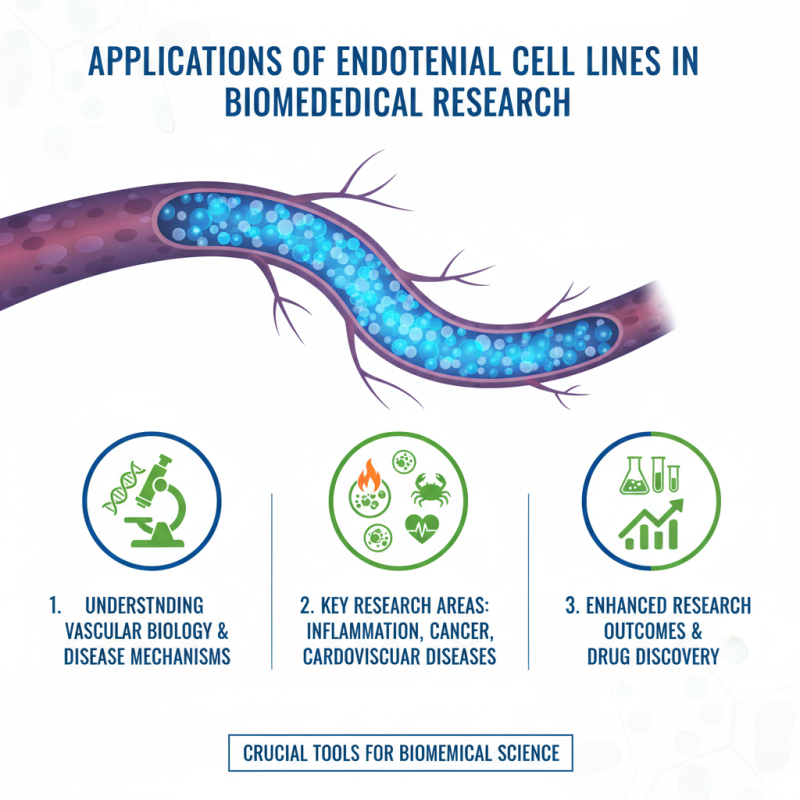
Endothelial cell lines play a crucial role in biomedical research. They help scientists understand vascular biology and disease mechanisms. These cells line blood vessels and have unique properties that make them invaluable in experiments. They contribute to studies on inflammation, cancer, and cardiovascular diseases. Using the right cell line can enhance research outcomes.
Tips: Choose cell lines that mimic the specific tissue type or condition you are studying. This increases the relevance of your results.
In experiments, endothelial cell lines can be used for drug testing and toxicity assessments. They offer a controlled environment to evaluate drug efficacy and safety. However, it's crucial to remember that these lines may not perfectly represent in vivo conditions. Researchers must approach findings with caution.
Tips: Validate results using primary cells or animal models. This helps ensure accuracy and relevance.
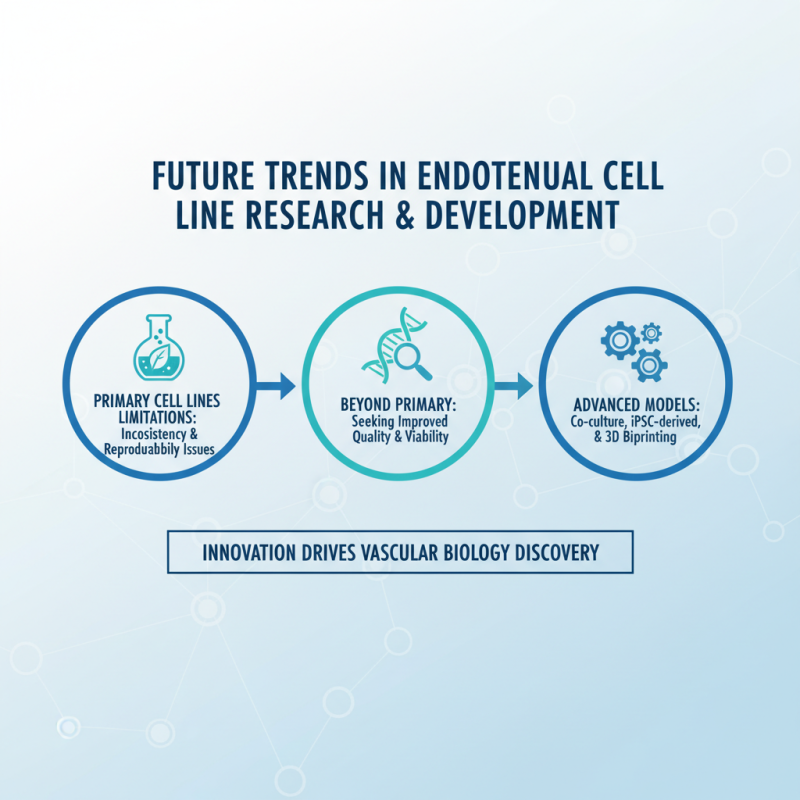
Exploring endothelial cell lines allows researchers to uncover new therapeutic targets. Yet, challenges persist. Issues like genetic drift or altered behavior over time can affect results. Continuous assessment and refinement of experimental approaches are necessary for meaningful research.
Methods for Culturing and Maintaining Endothelial Cell Lines
When culturing endothelial cell lines, several factors must be considered. Optimal growth conditions include using a suitable culture medium. This medium should be enriched with essential nutrients. Growth factors can also play a crucial role. These components help maintain cell viability and promote cell proliferation.
Temperature and atmospheric conditions are vital in cell culture. Typically, a temperature of 37°C is necessary. CO2 levels should also be monitored closely. Creating a stable environment can sometimes be challenging. Minor fluctuations can stress the cells, often leading to inconsistent results.
Regularly assessing cell morphology is key. Cells should display a cobblestone appearance when healthy. Any changes in shape can indicate underlying issues. Monitoring for contamination is equally important. Unexpected infections can derail experiments, requiring thorough decontamination protocols. Reflecting on methods can improve cell maintenance, ensuring research quality.