Top TCM Granules Manufacturers in China?
Choosing a reliable Tcm Granules manufacturer in China takes more than comparing product catalogs. Buyers need to understand how raw herbs are identified, processed, tested, and packed. Small differences matter. A damp pouch, unclear batch code, or inconsistent granule texture can raise practical questions before a product reaches a pharmacy or clinic.
This guide introduces manufacturers and the checks that help buyers assess them. It looks at production capabilities, quality documentation, testing practices, packaging options, and communication during sampling. Useful evidence may include traceable batch records, clear specifications, and test results that match the product offered. A factory visit or independent audit can add context, but neither replaces review of current documents and applicable requirements. Requirements can vary by destination, product category, and intended use.
A polished website is not proof. Nor does a long product list guarantee consistent production. Buyers should ask how botanical identity is confirmed, how moisture is controlled, and how changes between batches are handled. Ask for concrete answers. This overview is not a formal ranking, and supplier suitability depends on the buyer’s needs. Even a careful shortlist can miss a detail that matters later. That is worth remembering. Use the profiles as a starting point, then verify claims directly before making a sourcing decision.
What Are Traditional Chinese Medicine Granules?
What Are Traditional Chinese Medicine Granules?
Traditional Chinese medicine granules are concentrated, dried extracts made from individual medicinal materials. In practice, manufacturers identify and inspect the raw materials, extract them with water, concentrate the liquid, and dry it into powder or granules. A practitioner can then combine measured amounts of different ingredients and dissolve the mixture in hot water. No boiling pot is needed. The category is not perfectly uniform: extraction methods and product specifications may differ, so “granule” alone does not guarantee identical composition.
Quality depends on more than appearance. Botanical identity, contaminant testing, extraction controls, and batch consistency all matter. The World Health Organization’s 2019 Global Report on Traditional and Complementary Medicine found that 170 of its 194 Member States reported use of traditional medicine. That figure describes broad use, not the safety or effectiveness of any specific granule. Buyers should review a manufacturer’s testing records and applicable pharmacopeial standards rather than rely on a label alone. Granules are convenient, but convenience is not proof of quality.
Tips: Ask for ingredient identity, batch-specific test results, and storage instructions. Check whether the product is intended for dispensing by a qualified practitioner. Keep expectations realistic; processing can change the properties of herbal materials.
How Are TCM Granules Manufactured in China?
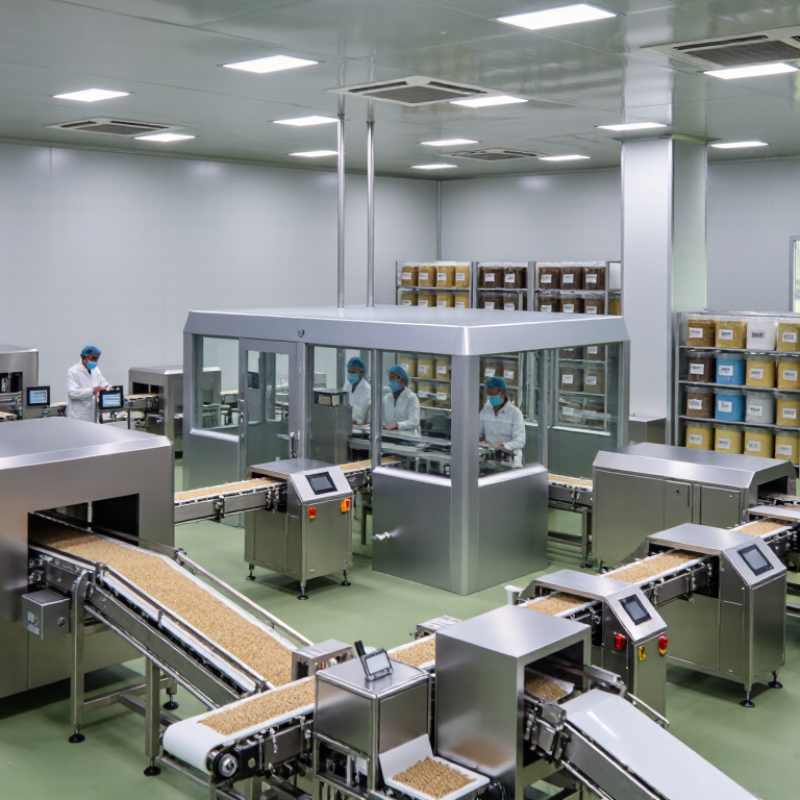
In China, TCM granule manufacturing begins with identifying and inspecting the raw medicinal materials. Staff check botanical identity, appearance, moisture, and supplier records before processing. Foreign matter is removed, and the herbs are cut or prepared for extraction. Each formula may require different handling. It matters.
The prepared materials are usually extracted with water under controlled conditions. Temperature, extraction time, and the ratio of herb to water affect the resulting liquid. The extract is filtered and concentrated, then dried into powder or granules. Some products use suitable excipients to improve flow or dissolve more evenly. Those details should be recorded, not guessed.
Quality checks continue throughout production. Manufacturers may test identity, key chemical markers, moisture, microbial limits, and contaminants such as heavy metals. Batch records help link finished granules to their raw materials and processing conditions. A clear label should explain the product’s composition and preparation instructions. Still, chemical testing cannot describe every traditional property of a complex formula. That limitation deserves attention. Consistent equipment and documented controls support reliable batches, but careful review of the finished product remains essential.
What Criteria Define a Leading TCM Granules Manufacturer?
A leading TCM granules manufacturer can show how raw herbs become consistent, traceable batches. Ask how materials are identified and sourced, and whether supplier records can be reviewed. Botanical appearance, origin, and harvest conditions may affect the starting material. Details matter.
Reliable production also depends on controlled extraction, concentration, drying, and granulation. Request batch records and test reports covering identity, moisture, microbial quality, and contaminants where applicable. Particle size and solubility matter too; a granule that looks uniform may still behave differently in water. Check how the manufacturer investigates out-of-specification results and handles changes to equipment or processes. No facility is flawless, and a polished audit report alone cannot prove day-to-day consistency. Ask to see evidence across multiple batches.
Tips: Compare the same documents across recent batches. Ask who performs each test and whether methods are validated. Confirm that quality systems and product documentation meet the requirements of your intended market. If an answer is vague, follow up in writing. It takes time. Don’t rely on broad claims such as “premium quality” without supporting records.
Which Chinese Manufacturers Are Notable in the TCM Granules Sector?
Notable Chinese manufacturers in the TCM granules sector are best assessed by their production controls, not by scale alone. Look for documented procedures covering raw-herb identification, extraction, concentration, drying, and batch release. These steps affect the granules’ appearance, solubility, and consistency. A fine powder should not be mistaken for proof of quality.
Manufacturers with clear sourcing records and validated testing methods are easier to evaluate. Ask how they check incoming herbs for identity and contaminants, and whether finished batches can be traced to their raw materials. Useful evidence includes sample test reports, stability data, and records of corrective actions. Details matter. A tidy brochure does not replace them.
Some producers stand out through focused investment in extraction lines, automated weighing, or laboratory capacity. Others may offer stronger documentation but less flexibility for small orders. Neither profile is automatically better. Compare capabilities against the intended product and request representative samples before making a decision. Even a careful review has limits: a single sample cannot show how consistently a factory performs across seasons and batches. That point is easy to overlook.
Top TCM Granules Manufacturers in China? - Which Chinese Manufacturers Are Notable in the TCM Granules Sector?
This table summarizes verifiable sector-wide requirements and comparison criteria rather than ranking or naming individual manufacturers. Product standards and licensing details should be checked against current official records.
| Evaluation Dimension | Verified Sector Information | What Buyers Can Check |
| Regulatory framework | China ended the pilot-only framework for TCM formula granules in 2021 and expanded the applicable framework nationwide. | Confirm that the manufacturer’s authorization and product supply arrangements comply with current national and local requirements. |
| Manufacturing authorization | Manufacturers are subject to drug-manufacturing licensing requirements and applicable Good Manufacturing Practice requirements. | Verify the current production license, its approved scope, and the relevant manufacturing site through official regulatory records. |
| Product standards | National standards for TCM formula granules have been issued in batches since 2021. Where a national standard is not available, applicable provincial standards may be relevant. | Check the standard used for each individual granule, its issuing authority, and whether the standard is current and applicable to the product. |
| Product definition | TCM formula granules are produced from single Chinese herbal medicines through processes that can include extraction, concentration, drying, and granulation. | Review the stated source material and manufacturing process, and confirm that the finished granule corresponds to its declared herbal medicine. |
| Quality testing | Quality specifications are product-specific and are set out in the applicable national or provincial standard; there is no single universal test specification for every granule. | Request batch-specific test documentation and compare identification tests, measured constituents, and relevant limits with the product’s applicable standard. |
| Raw-material controls | Raw-herb identity and quality are fundamental to the quality of the finished granule, while requirements can vary by herb and its applicable standard. | Assess documentation for herb identification, origin and supplier controls, incoming inspection, and traceability from raw material to finished batch. |
| Process consistency | Extraction and subsequent processing are part of formula-granule manufacture; their control is relevant to the consistency of finished products. | Review process-validation evidence, in-process controls, batch records, and procedures for handling process changes. |
| Supplier comparison | Regulatory compliance and product-standard coverage are more meaningful comparison points than an unsupported “top manufacturer” ranking. | Compare license scope, relevant product standards, quality documentation, supply continuity, and the ability to provide traceable batch records. |
Reference basis: National Medical Products Administration and National Administration of Traditional Chinese Medicine policy notices on ending the TCM formula-granule pilot and the published national or provincial standards applicable to individual products. Confirm current requirements with the relevant authorities.
How Can Buyers Compare TCM Granules Manufacturers?
Buyers comparing TCM granule manufacturers should look beyond quoted price and production capacity. WHO’s 2019 Global Report on Traditional and Complementary Medicine found that 170 of 194 member states reported using traditional and complementary medicine. This indicates broad use, not proof of granule quality. Ask how each supplier identifies botanical materials, controls extraction, and verifies every batch. Request traceability records linking the herb source to the finished product. Then check test methods, acceptance limits, and certificates against applicable Chinese standards. Details matter.
Compare batch-to-batch consistency with actual records, not only a polished presentation. Review assay results, moisture limits, microbial testing, and stability data for representative products. Ask to see a recent certificate of analysis and understand which tests are performed in-house or by independent laboratories. WHO’s Good Manufacturing Practices guidance emphasizes documented controls and quality checks throughout production; buyers can use these principles when assessing a supplier’s quality system. That sounds obvious. It is often missed. A clean spreadsheet may still hide gaps between sampling and release. Visit the facility when possible, observe material labeling and segregation, and ask staff to explain deviations and corrective actions. Also compare lead times, minimum order quantities, and change-control procedures. The cheapest quote can become costly if specifications shift without clear notice. One limitation remains: a short audit cannot establish long-term consistency. Ask for trend data across several batches.