What Is Precision Medicine and How Does It Work?
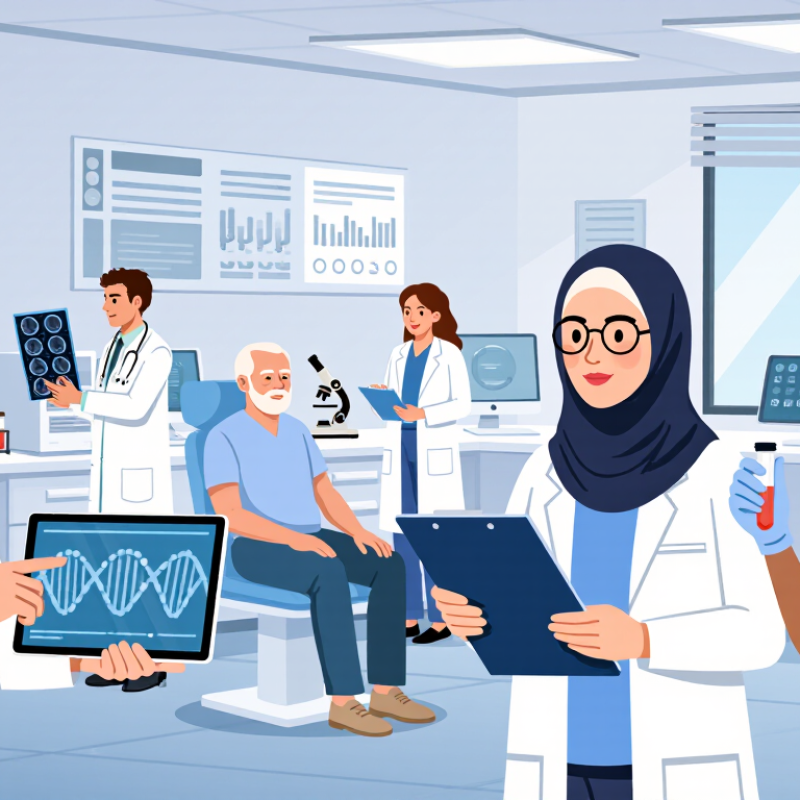
Precision medicine is changing how clinicians understand disease and choose treatment. Instead of treating every patient alike, it considers genetic information, lifestyle, environment, and clinical history. A tumor sample, for example, may reveal a mutation that responds to a specific therapy. A blood test can also identify biological markers linked to disease risk or treatment response. These details help doctors make more informed decisions.
The process usually begins with careful data collection. Healthcare professionals may review symptoms, family history, imaging results, laboratory findings, and genomic tests. Specialized laboratories then analyze this information, while clinicians interpret the results within the patient’s real circumstances. The goal is not simply to find a genetic difference. It is to determine whether that difference has meaningful medical value. Precision medicine is not magic. Tests can be expensive, results may be uncertain, and access remains unequal across communities. Some findings also raise difficult questions about privacy and future health risks. The picture remains incomplete.
Strong decisions require evidence from clinical research, validated testing, and qualified medical guidance. Doctors should explain both potential benefits and limitations before recommending a precision-based approach. A result may guide treatment, but it cannot replace professional judgment or patient preferences. In practice, precision medicine works best as a partnership between patients, clinicians, genetic counselors, laboratory experts, and researchers. Its promise is substantial, but careful interpretation matters just as much.
Definition and Scope: Precision Medicine Uses Individual Biological Variation
Precision medicine is care shaped by individual biological variation. It examines genes, proteins, metabolism, lifestyle, and environment before treatment decisions are made. A blood sample may reveal how quickly a patient processes a medicine. A tumor biopsy may identify mutations linked to treatment response. Biology is personal.
The scope is substantial.
The International Agency for Research on Cancer estimated 20 million new cancer cases and 9.7 million cancer deaths worldwide in 2022, according to its Global Cancer Observatory report. Such figures show why uniform treatment can be inadequate. Two patients with the same diagnosis may carry different mutations, immune profiles, or drug sensitivities. Precision tools can help doctors select therapies, adjust doses, and monitor resistance over time.
Yet precision medicine is not a crystal ball. The National Human Genome Research Institute notes that a human genome contains about 3 billion DNA bases, while many variants remain difficult to interpret. A genetic result may suggest risk, not certainty. Context still matters. Diet, sleep, income, pollution, and access to care can alter outcomes. A 2023 National Academies review also emphasized the need for validated evidence, privacy safeguards, and diverse datasets. In practice, clinicians combine test results with medical history and patient preferences. Some tests fail to produce a clear answer. That limitation deserves honest discussion.
Data Inputs: Genomes, Biomarkers, EHRs, and Lifestyle Profiles
What Is Precision Medicine and How Does It Work?
Data Inputs: Genomes, Biomarkers, EHRs, and Lifestyle Profiles
Precision medicine begins with better information about one person. A genome may reveal inherited variations linked to disease risk or treatment response. It does not predict the future with certainty. A blood biomarker can add current evidence, such as inflammation, hormone levels, or organ function. Repeated testing often matters more than one isolated result.
Electronic health records provide clinical context. They may show diagnoses, medication history, imaging findings, allergies, and treatment outcomes. Clinicians compare these records with genomic and biomarker data before making decisions. A patient’s lifestyle profile adds another layer. Sleep patterns, diet, exercise, stress, and exposure history can influence health measurements. A morning glucose reading may mean something different after poor sleep or intense exercise.
The process is collaborative. Specialists review data quality, interpret research evidence, and discuss practical options with the patient. Secure data handling is essential. So is clear consent. Algorithms can identify patterns, but they can also reflect incomplete records or biased datasets. The model can still be wrong. Lifestyle information is especially messy. People forget details, measurements vary, and circumstances change. For that reason, responsible precision medicine treats data as guidance, not a final verdict. A careful team checks results against symptoms, examination findings, and the patient’s own experience.
Clinical Workflow: From Sequencing to a Patient-Specific Treatment Plan
What Is Precision Medicine and How Does It Work?
Precision medicine turns biological information into a patient-specific treatment plan. The clinical workflow begins with consent, medical history, and a carefully collected sample, such as blood or tumor tissue. A laboratory then performs genomic sequencing and checks quality, coverage, and possible contamination. The result is not a treatment yet. It is a long list of genetic findings requiring clinical interpretation.
A molecular tumor board may compare mutations with evidence from professional guidelines, clinical trials, and curated medical databases. The team considers variant strength, cancer type, previous therapies, kidney function, allergies, and patient preferences. The 2024 Personalized Medicine Coalition report recorded more than 200 personalized medicines and diagnostics approved for clinical use in the United States. That number shows progress, but access remains uneven. Sequencing alone cannot guarantee benefit.
The final report separates actionable findings from uncertain variants. This distinction matters. The American Society of Clinical Oncology has emphasized that genomic results should support, not replace, clinical judgment. A physician may recommend a targeted therapy, immunotherapy, standard treatment, or a trial. Pharmacists can review interactions and dosing risks. Genetic counselors may explain inherited findings to relatives. Follow-up testing then tracks response and resistance. Results can change.
Some workflows still move too quickly from a detected mutation to a confident recommendation. That is a weakness worth challenging. Data quality, sample timing, and incomplete evidence can alter the plan. Precision medicine works best as a repeated clinical conversation, not a single laboratory event.
Evidence Base: More Than 60 FDA Drug Labels Include Pharmacogenomic Data
Precision medicine uses a person’s genetic information to guide medical decisions. Pharmacogenomics is one practical part of this approach. It examines how inherited DNA may affect drug breakdown, effectiveness, or side effects.
More than 60 FDA drug labels include pharmacogenomic information.
These labels may identify genes linked to unusual drug metabolism or serious reactions. For example, a genetic result can suggest that a patient processes a medicine too slowly. A clinician might then adjust the dose or consider another treatment. Sometimes, testing helps predict whether a medicine is likely to work. The result is not a crystal ball.
The process usually begins with a cheek swab or blood sample. A laboratory analyzes selected genetic variants and reports clinically relevant findings.
A qualified healthcare professional must connect those findings with the patient’s diagnosis, current medicines, kidney function, and treatment history. Experience matters here.
Genetic data can be powerful, yet it may not explain every response. Environmental factors, adherence, and disease changes also influence outcomes.
The evidence base continues to grow, but gaps remain.
Some recommendations rely on strong clinical studies, while others need broader validation across populations. This matters because genetic research has not represented every ancestry equally.
A careful discussion should include benefits, uncertainties, and the possibility that testing may not change treatment.
Precision is useful only when the evidence fits the individual patient.