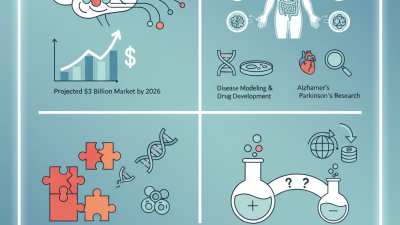

The global market for ips cell lines is expanding, but buyer confidence depends on evidence, not attractive catalog images. Market reports from Grand View Research and Roots Analysis forecast strong growth in induced pluripotent stem cell applications through 2030. Their estimates differ considerably. Definitions, licensing scope, and clinical-stage revenue are not always consistent. That uncertainty deserves attention.
The Alliance for Regenerative Medicine’s 2024 sector report records continuing investment across cell and gene therapy. However, iPSC-specific demand requires more detailed screening. Buyers should examine donor consent, reprogramming method, passage history, karyotype data, sterility testing, mycoplasma results, and differentiation performance. The ISSCR Guidelines for Stem Cell Research and Clinical Translation stress provenance, quality control, and responsible use. These principles shape our selection of the top 10 ips cell lines for global buyers.
Nobel laureate Shinya Yamanaka once said, “I was very surprised to see that four factors can reprogram somatic cells.” His observation changed modern cell biology. It also reminds buyers that simple reprogramming does not guarantee a reliable research model. A strong cell line should perform consistently in real laboratory conditions, not only in a supplier’s brochure. Batch records matter. So do shipping temperatures, recovery instructions, and technical support. Some comparisons remain imperfect because suppliers disclose different datasets. That limitation is worth admitting. This guide therefore combines published evidence, supplier documentation, regulatory expectations, and practical purchasing experience. The result is a clearer starting point for researchers, biotechnology companies, and international procurement teams.

Induced pluripotent stem cell lines, often called iPS cell lines, are mature human cells reprogrammed into a flexible, stem-like state. They can develop into neurons, heart cells, liver cells, and other specialized cell types. This versatility makes them valuable for disease modeling, drug screening, toxicity studies, and developmental research. The process is scientifically powerful, but it is not a magic shortcut.
Global buyers use iPS cell lines because they can support repeatable experiments across laboratories and countries. A qualified line may reduce the need for repeated primary tissue collection and provide a more consistent starting material. Researchers can also compare cells carrying specific genetic variants with matched control cells. Small details matter. Passage number, donor consent, genetic stability, and cell viability can affect results.
For procurement teams, the top 10 iPS cell lines should not be judged by popularity alone. Buyers should review authentication records, pluripotency marker data, sterility testing, karyotype results, and documented handling conditions. Evidence of successful differentiation is also useful, especially when the project requires neurons or cardiac cells. However, published performance may not transfer perfectly to every laboratory. That is the part worth questioning. A reliable supplier should provide traceability, clear storage instructions, and technical support without overstating expected outcomes.

Top 10 IPS Cell Lines for Global Buyers
How the Top 10 iPS Cell Lines Are Selected and Compared
Selecting ten iPS cell lines for global buyers requires more than ranking popularity. A practical review begins with donor information, reprogramming method, passage history, and genomic stability. We also examine sterility records, mycoplasma results, viability after thawing, and differentiation performance.
Comparison must match the intended experiment. A line that forms neural cells reliably may perform differently in cardiac or liver models. We compare growth rate, morphology, doubling time, karyotype data, and marker expression under defined conditions. For example, a vial showing 85% post-thaw viability may be useful, but only if colonies recover evenly within several days. Storage temperature, shipping duration, documentation, and local import requirements also affect the real buying decision.
Experience has taught us to distrust impressive tables without raw evidence. Replicate data matters. So does the date of testing. Some public records remain incomplete, and older results may not predict current batches. That weakness should be stated, not hidden. We also consider genetic background, disease relevance, and whether consent documentation supports the proposed research. Price alone is a poor filter; a cheaper line can consume weeks of failed culture work. The final ten should reflect evidence quality, reproducibility, access conditions, and fit for purpose—not merely international visibility.
How the top 10 iPS cell lines are selected and compared using publicly reported evidence on pluripotency, genomic quality control, differentiation breadth, protocol reproducibility, and donor documentation. The scores are normalized comparative indices from 0 to 100, not direct assay measurements.
Selection criteria reflect commonly reported buyer requirements: confirmed pluripotency, documented karyotype and quality control, evidence across multiple differentiation lineages, reproducible expansion or differentiation workflows, and completeness of donor or genetic background information. Cell-line identifiers are used without company or brand information.
Global buyers often assess iPS cell lines by reproducibility, traceability, and intended use. A healthy adult donor line offers a familiar baseline for disease modeling. A cord-blood line often shows strong expansion and stable banking performance. Peripheral-blood lines can reduce reprogramming time in some workflows.
A female XX line supports sex-specific research. A male XY line adds a useful genetic comparison. HLA-homozygous lines may improve matching studies.
Disease-associated lines can reveal patient-specific phenotypes. However, mutation status needs independent confirmation.
The most practical shortlist also includes an isogenic corrected line, an integration-free line, and a clinical-grade line produced under controlled manufacturing procedures.
The corrected pair is valuable because genetic background stays nearly identical. Integration-free cells reduce concerns about residual reprogramming elements.
Clinical-grade material requires stronger documentation, controlled storage, and qualified release testing.
Buyers should request donor consent records, identity testing, karyotype results, mycoplasma reports, pluripotency markers, and passage history. Ask for differentiation data, not only attractive photographs. A bright colony is not proof of performance.
Shipping records matter too, especially when cells arrive after several days in dry ice. The ranking is practical, not absolute. A high-quality line can still perform poorly in a new laboratory. That is the part many purchasing guides understate.
Top 10 IPS Cell Lines for Global Buyers
Applications, Compatibility, and Research Potential
The top ten iPS cell lines should be judged by research fit, not popularity alone. Each line offers different potential for disease modeling, drug screening, toxicology, organoid development, or tissue studies. Experienced buyers should review donor background, reprogramming methods, passage history, and genomic stability. Verified identity matters. So does consistent differentiation performance across repeated experiments.
Compatibility can determine practical success. Check whether the line supports your preferred culture system, media, matrix, and assay format. Some lines perform well in feeder-free conditions, while others need careful adaptation. HLA type, sex, age, disease status, and genetic background may affect results. Global purchasing also requires clear cryopreservation records, temperature-controlled shipping, and dependable quality documentation. A line may look ideal on paper, yet produce uneven results in a new laboratory.
Research potential is never fully predictable. Some evidence remains limited, especially across uncommon disease models. That deserves honest attention. Tips: Compare at least three independent quality records before ordering. Request mycoplasma results, sterility data, identity testing, and recent viability measurements. Begin with a small pilot study. Track attachment, growth rate, morphology, and differentiation markers during the first passages. Keep acceptance criteria written in advance. This prevents attractive but weak data from guiding a larger purchase.
Selecting among the top 10 IPS cell lines requires more than comparing catalog prices. Global buyers should examine donor consent, reprogramming records, passage history, and intended research use. A reliable supplier provides traceable documentation, not vague performance claims. Ask for raw data.
Check identity and quality records before purchase. Useful evidence includes short tandem repeat profiling, karyotyping, mycoplasma testing, and pluripotency marker results. Review how recently each test was performed. A certificate alone does not prove consistent cell behavior. Request representative images, growth data, and differentiation results when available.
Purchase options should match the project timeline and laboratory capability. Cryopreserved, ready-to-use lines may reduce preparation time, while custom reprogramming can offer a closer donor match. Compare minimum order quantities, replacement policies, temperature-controlled shipping, and import documentation. Confirm the material transfer agreement before payment. It should clearly define permitted research, redistribution limits, and publication expectations. Suppliers should also explain how they manage donor privacy and cross-border compliance. Local requirements can differ sharply. Do not assume one document satisfies every country. In practice, buyers may overlook recovery rates after shipment or differences between lots. That mistake is costly. A small pilot order, independent quality review, and written technical support terms can expose weaknesses before a larger commitment.
A practical comparison of widely documented human induced pluripotent stem cell lines and the quality, documentation, and purchasing criteria that international buyers should review before ordering.
| Rank | Cell Line | Documented Biological Source | Reprogramming Profile | Common Research Applications | Key Supplier Documents to Request | Recommended Purchase Format | Buyer Evaluation Priority |
|---|---|---|---|---|---|---|---|
| 1 | 201B7 | Human adult dermal fibroblast-derived iPSC line; donor metadata should be confirmed from the accompanying record. | Early human iPSC line generated using integrating reprogramming vectors. | Pluripotency studies, neural differentiation, cardiomyocyte differentiation, and benchmark method development. | Certificate of analysis, identity profile, karyotype or genomic stability report, mycoplasma result, passage history, and donor consent statement. | Frozen research vial Suitable for laboratories with established expansion capability. |
Confirm integration status and passage-dependent genomic stability before use in sensitive assays. |
| 2 | 253G1 | Human adult fibroblast-derived iPSC line with a well-established research history. | Early-generation iPSC line produced with integrating vector technology. | Directed differentiation, developmental biology, cell therapy process research, and comparative iPSC studies. | Cell identity, sterility, mycoplasma, karyotype, pluripotency marker panel, and complete reprogramming history. | Frozen vial or expanded culture | Review vector integration, current passage number, and post-thaw recovery data. |
| 3 | 454E2 | Human fibroblast-derived iPSC line used in foundational differentiation research. | Early human iPSC line; the original reprogramming approach used integrating vectors. | Neural lineage work, embryoid-body studies, pluripotency benchmarking, and protocol optimization. | Authentication record, morphology images, pluripotency testing, genomic stability data, and pathogen screening results. | Frozen research vial | Prioritize documented post-thaw viability and differentiation reproducibility. |
| 4 | 409B2 | Human adult fibroblast-derived iPSC line documented in early human reprogramming studies. | Integrating-vector-derived research line. | Lineage specification, pluripotency assays, disease-model platform development, and laboratory controls. | Certificate of analysis, short tandem repeat or equivalent identity test, karyotype, mycoplasma, and passage documentation. | Research-use-only vial | Check whether the intended application permits integrating reprogramming footprints. |
| 5 | 585A1 | Human fibroblast-derived iPSC line used as a research model for pluripotency and differentiation. | Early-generation line associated with integrating reprogramming technology. | Cardiac, neural, and general three-germ-layer differentiation research. | Donor and consent information, identity confirmation, sterility testing, mycoplasma result, and genomic quality report. | Cryopreserved vial | Compare lot-level viability and growth rate with the buyer's in-house acceptance criteria. |
| 6 | 604A1 | Human fibroblast-derived iPSC line from a documented research collection. | Integrating-vector-derived line; exact vector history should be verified in the lot documentation. | Basic stem-cell biology, differentiation screening, and method comparison studies. | Cell-line history, certificate of analysis, karyotype, pluripotency markers, mycoplasma, and storage instructions. | Research-use-only vial | Ensure the supplier provides sufficient traceability for international import and institutional review. |
| 7 | 610B1 | Human fibroblast-derived iPSC line used in comparative stem-cell research. | Early human iPSC line; reprogramming-vector details should be checked against the supplied technical file. | Pluripotency testing, differentiation assays, culture-condition optimization, and control experiments. | Identity test, contamination screen, karyotype or sequencing report, passage number, and viability specification. | Frozen vial with technical file | Evaluate data completeness and consistency between the product label and quality documents. |
| 8 | IMR90-4 | Human fetal lung fibroblast-derived iPSC line from the IMR90 research model. | Classically reprogrammed using integrating retroviral vectors. | Cellular aging, genomic stability, pulmonary biology, differentiation, and reprogramming studies. | Source-cell record, karyotype, identity test, mycoplasma result, pluripotency evidence, and passage history. | Specialized research vial | Confirm that the fetal-tissue provenance and consent documentation meet local institutional requirements. |
| 9 | WTC11 | Human fibroblast-derived iPSC reference line widely used in genome-editing and differentiation research. | Commonly associated with non-integrating Sendai-virus reprogramming; lot-specific records should be reviewed. | CRISPR editing, reporter-cell development, neuronal differentiation, cardiac differentiation, and assay controls. | Residual reprogramming-vector test, identity confirmation, karyotype or sequencing data, mycoplasma, and post-thaw performance results. | Frozen vial or qualified working bank | Verify absence of residual vector when vector-free status is important to the experiment. |
| 10 | KOLF2.1J | Human reference iPSC line selected for reproducible stem-cell and genome-engineering research. | Reference-line profile; the exact non-integrating reprogramming and banking history must be confirmed from the supplied records. | Genome editing, differentiation benchmarking, assay development, and cross-laboratory reproducibility studies. | Whole-genome or SNP identity data, karyotype, mycoplasma, pluripotency panel, passage number, and release criteria. | Qualified master or working cell bank | Prioritize genomic comparability, low-passage material, and documented editing compatibility. |
Purchasing note: Availability, passage number, genetic stability, residual-vector status, shipping conditions, import permits, and release specifications can vary by supplier and lot. Global buyers should obtain current lot-specific quality documents and confirm that the material is approved for research use in the destination country before purchase.