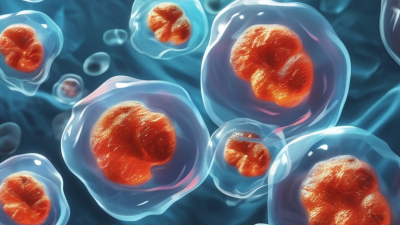
Choosing from China’s top 10 endothelial cell line suppliers calls for more than comparing prices or catalog size. A vial may look suitable on paper, yet its tissue origin, passage history, or culture requirements can affect experimental results. Small details matter.
This guide introduces suppliers through practical criteria: cell-line provenance, species and tissue information, authentication methods, mycoplasma testing, recommended media, passage guidance, and technical support. Buyers should also check whether product documents match the exact line and lot they plan to order. Ask specific questions. Clear answers are useful; vague assurances are not.
A principle reflected in vascular biologist William C. Aird’s work is that endothelial identity depends on tissue origin and experimental context. This is a paraphrase, not a direct quotation. It is worth keeping in mind when comparing lines from different vascular beds. A model suited to one experiment may not represent another. Not always.
The supplier landscape can change, and public product information may not reveal every difference in quality control. So this overview is a starting point, not a substitute for reviewing current documentation or speaking with technical staff. Some comparisons will remain imperfect. That limitation deserves attention, especially when a study depends on consistent cell behavior across experiments. Our focus is to help readers assess endothelial cell lines with a clearer set of questions before selecting a supplier.

Endothelial cell lines provide a practical model for studying cells that line blood vessels. Researchers use them to investigate barrier function, inflammation, angiogenesis, and responses to drugs or environmental signals. In a typical assay, cells form a layer across a small culture insert, allowing researchers to measure how molecules pass through it. Useful, but not identical to living vessels.
These cells can support repeatable experiments and reduce variation between runs. However, immortalized lines may differ from primary endothelial cells in gene expression, morphology, and function. Results also depend on cell source, passage number, culture medium, and handling. A change in growth conditions can alter barrier integrity or marker expression. That detail is easy to miss. For stronger conclusions, researchers often confirm key findings with primary cells, tissue samples, or another independent method.
Tips: Check the cell-line documentation and verify identity before use. Keep passage numbers consistent, monitor morphology, and test for contamination regularly. Record culture conditions carefully. Small differences matter. A cell line is a model, not a complete substitute for human vascular biology.

Representative endothelial cell models mapped to their commonly used research applications. This is a categorical guide, not a supplier ranking or performance comparison.
A value of 1 indicates a representative application for that model; 0 means the application is not a defining use in this overview, not that the model cannot be used for it. HUVECs are primary cells and are not included as a cell line.
When assessing endothelial cell line suppliers in China, ask for the exact vascular source, species, donor information, and whether cells are primary or immortalized. These details affect how closely a line fits your model. Request a recent certificate of analysis covering identity, mycoplasma status, viability, and passage number. Details matter.
Check identity with a suitable method: STR profiling for human lines, or species-appropriate testing for animal lines. Then review endothelial markers such as CD31, VE-cadherin, and von Willebrand factor. A 2017 PLOS ONE analysis reported 451 misidentified cell lines and 32,755 papers using them, underscoring why authentication records matter. Marker results alone do not establish cell-line identity. I would check twice.
Supplier evaluation should include practical delivery evidence, too. Ask how cells are packed, what temperature they must maintain in transit, and what to do if the vial arrives warm or damaged. Request thawing instructions and representative post-thaw recovery data. Compare these records with your own lab’s protocol, not just the product description. I may be overly cautious, but a tidy certificate cannot show how cells behave after thawing. Test a small batch before committing to a larger order.
A practical comparison of ten endothelial cell line suppliers in China should focus on what each can document, not just catalogue size. One profile may specialize in immortalized human endothelial cells; another may offer primary cells with limited passage history. Others may provide vascular-bed-specific models, disease-relevant lines, or cells from different species. Some suppliers emphasize authenticated stocks, while others focus on custom expansion or technical guidance. These are useful distinctions, but catalogue descriptions alone cannot confirm performance.
For each supplier, check the cell source, species, passage range, recommended medium, and available characterization data. Ask whether the vial comes with a certificate of analysis and recent quality-control results. Details matter. A clear thawing protocol and a responsive technical contact can save days when cells arrive stressed. Compare shipment conditions too: dry ice, packaging integrity, and delivery timing all affect recovery. Not every profile will suit every assay.
A careful review should also note what remains unclear. For example, a supplier may report endothelial markers without showing how consistently they appear across passages. Request supporting data, and compare it with your own acceptance criteria. Evaluate recovery after thawing, morphology, growth behavior, and experimental reproducibility in a small pilot. I would avoid ranking providers from marketing claims alone; that feels tidy, but it can hide important gaps. Verify current specifications directly, since stock and documentation may change.
China’s endothelial cell line suppliers should be compared on documented quality, not catalogue size alone. MarketsandMarkets’ Cell Culture Market—Global Forecast to 2028 estimated the market at US$23.6 billion in 2023, rising to US$41.3 billion by 2028. This broad market figure is not endothelial-specific, but it signals growing demand for dependable cell culture inputs. Scale alone proves little.
Check whether each supplier provides species, tissue origin, passage range, authentication method, and lot-specific viability. Ask for mycoplasma test results and certificates of analysis; for endothelial models, confirm relevant markers and functional data, such as barrier integrity or tube-formation assay conditions. Compare the details. A result without its protocol is hard to interpret. Technical support matters when thawing produces uneven attachment or growth slows after passage. Look for clear recovery instructions, response times, and help troubleshooting media and coating choices. Independent testing is useful, but laboratories should validate cells under their own conditions. Supplier documents can be incomplete, and a polished datasheet is not a substitute for reproducible performance. One limitation: public reports rarely compare supplier-level failure rates, so buyers must judge evidence carefully.
Choosing among endothelial cell line suppliers starts with your experiment, not a popularity ranking. Define the vessel origin, species, assay, and expected growth behavior before comparing catalogs. A line suited to permeability testing may not represent your tissue model well. Ask for identity records, passage guidance, culture conditions, and available quality-control data. Check whether contamination screening is documented and shipping instructions are clear. Small details matter: a delayed package or vague thawing steps can cost days of work.
Look beyond the listed price. Confirm what is included, how batch information is tracked, and what support is available if cells recover poorly after thawing. Request recent documentation and compare it with your laboratory’s acceptance criteria. Also ask whether the supplier can explain variation between lots; “consistent” is not very useful without context. Technical support should answer practical questions about seeding density and culture conditions, not just repeat catalog text. I would still verify important claims independently. No supplier can remove every variable, but transparent records and responsive communication make problems easier to investigate. Keep your own notes from the first passage onward.
Supplier evaluation framework: the entries below are ten practical screening criteria, not a verified ranking of companies. Confirm product-specific details directly with each supplier before purchase.
| No. | Supplier Evaluation Dimension | What to Verify | Why It Matters | Useful Evidence to Request |
|---|---|---|---|---|
| 1 | Cell identity and tissue of origin | Confirm the endothelial cell type, species, tissue source, and whether the cells are primary or immortalized. | Endothelial cells from different vascular beds can differ in phenotype and experimental suitability. | Product specification sheet, donor or source details where available, and cell identity test results. |
| 2 | Authentication | Ask how identity is established and whether the method is suitable for the cell type and species. | Authentication helps detect misidentification and cross-contamination. | A recent authentication report and a description of the assay used. |
| 3 | Mycoplasma and contamination testing | Check that the supplied lot has been tested for mycoplasma and that testing records are available. | Mycoplasma contamination can alter cell behavior and compromise experimental results. | Lot-specific test certificate, test date, and testing method. |
| 4 | Passage number and culture history | Confirm the passage number at shipment and the recommended passage range for use. | Passage history can affect growth, morphology, and phenotype, particularly for primary cells. | Certificate of analysis and documented passage guidance. |
| 5 | Endothelial phenotype evidence | Ask which endothelial markers or functional characteristics were assessed for the specific product. | Marker expression and functional tests can help establish whether cells fit the intended assay. | Product-specific data, such as marker assay results or documented functional characterization. |
| 6 | Culture medium and protocol | Check the recommended medium, coating requirements, seeding guidance, and handling instructions. | Consistent culture conditions support cell recovery and reproducible growth. | Current product-specific culture protocol and a list of required supplements. |
| 7 | Lot consistency and availability | Ask about lot documentation, expected supply continuity, and whether a repeat lot can be reserved. | Lot-to-lot differences and interruptions in supply can affect long-term studies. | Representative lot records, current stock status, and written availability information. |
| 8 | Shipping and cold-chain handling | Confirm the shipping temperature, packaging method, dispatch schedule, and delivery condition requirements. | Temperature excursions or delays can reduce viability of temperature-sensitive biological materials. | Written shipping instructions, packaging details, and a process for reporting transit issues. |
| 9 | Documentation and traceability | Review the availability of lot numbers, certificates, storage conditions, and product-specific records. | Traceable documentation supports quality review and repeatability in laboratory workflows. | Sample certificate of analysis, safety information, and storage and handling instructions. |
| 10 | Technical support and issue resolution | Determine whether technical staff can address recovery, culture, and product-quality questions. | Responsive support can help troubleshoot handling problems and clarify product limitations. | Written support channels, response process, and applicable replacement or complaint policy. |
Before placing an order, compare suppliers using the same cell type, passage range, documentation requirements, and shipping conditions. Verify all claims against current product- and lot-specific records.