Top 10 Stem Cell Research Advances in China You Should Know?
In recent years, stem cell research in China has seen remarkable advancements. These breakthroughs offer significant potential for various medical applications. The landscape of medicine is changing rapidly, with China emerging as a global leader in this field. Innovative techniques and products are being developed, particularly in areas like regenerative medicine.
Chinese researchers are pushing boundaries to understand stem cells better. The studies focus on their potential to treat conditions like cancer and neurodegenerative diseases. Collaboration between academic institutions and industry has fueled this progress. However, with rapid growth comes ethical concerns. The need for rigorous oversight in stem cell research is essential to maintain public trust.
Despite these challenges, the benefits of stem cell research cannot be overlooked. Scientists aim to translate laboratory successes into real-world treatments. It is a journey filled with promise, but it requires constant reflection on ethical practices. Balancing innovation and morality will shape the future of stem cell therapies in China.

Innovative Techniques in Stem Cell Cultivation and Expansion in China
Stem cell research in China has made significant strides in recent years, particularly in the areas of cultivation and expansion techniques. Innovative practices are reshaping how stem cells are grown and utilized. For instance, Chinese researchers have been exploring three-dimensional (3D) culture systems. These systems allow for better mimicry of human tissue environments, leading to improved stem cell growth rates. According to a report by the National Natural Science Foundation of China, 3D culture increases cell viability by over 40% compared to traditional methods.
Moreover, advancements in bioreactor technology are contributing to enhanced scalability of stem cell production. These bioreactors facilitate larger-scale cultivation, which is essential for therapeutic applications. A study published in the "Chinese Journal of Cell Biology" revealed that using automated bioreactors could yield up to 1 billion stem cells in just a few weeks. However, challenges remain in maintaining cell purity and function during expansion. Researchers are actively investigating strategies to overcome these hurdles. For example, optimizing nutrient media composition and environmental conditions is a crucial area of focus.
The rapid pace of innovation highlights both progress and the need for further evaluation. While many advances are promising, the long-term effects of these technologies require thorough study. As techniques improve, the responsibility of ensuring ethical standards and safety practices in stem cell research becomes ever more critical. This growing field holds potential, but the complexities of cultivation methods must be thoughtfully addressed.
Breakthroughs in Stem Cell Therapy for Neurodegenerative Diseases
Neurodegenerative diseases pose significant challenges for global health. Recent advances in stem cell research in China show promise. These innovations aim to develop effective therapies for conditions like Alzheimer's and Parkinson's. Researchers are exploring various types of stem cells. Induced pluripotent stem cells (iPSCs) have gained attention. They can become any cell type, providing opportunities for personalized treatments.
One study highlighted stem cells' potential to regenerate damaged neurons. While results are encouraging, challenges remain. For instance, targeted delivery to affected areas is a crucial hurdle. Researchers are working on optimizing methods for this. Ethical considerations also arise, complicating the research landscape. Transparency in clinical trials is essential for public trust.
Despite these challenges, the momentum in stem cell research is inspiring. Collaborative efforts among institutions are accelerating discoveries. As knowledge expands, the hope for new therapies strengthens. Continuous evaluation of these advancements is crucial for future applications. The path may be fraught with obstacles, but the potential rewards are significant.
Top 10 Stem Cell Research Advances in China
This chart represents the levels of advancement in various areas of stem cell research in China, focusing on their application in treating neurodegenerative diseases. The percentages reflect the degree of progress in each area, highlighting significant breakthroughs achieved in recent years.
Advancements in Stem Cell Applications for Regenerative Medicine
Recent advancements in stem cell applications for regenerative medicine in China are remarkable. The nation's investment in research has propelled it to the forefront of this field. According to a report by the Chinese Academy of Sciences, over 1,000 stem cell clinical trials were registered in 2022 alone. This indicates a growing commitment to exploring new treatments for diseases like Parkinson's and diabetes.
One noteworthy development is the creation of induced pluripotent stem cells (iPSCs). These cells can be generated from adult tissue. They pave the way for personalized medicine, allowing tailored therapies for individual patients. However, ethical concerns and quality control remain significant challenges. Researchers must ensure the safety and efficacy of these treatments.
Tip: Always stay updated on the latest findings in stem cell research. Follow reputable journals and institutions for reliable information. Understanding the developments can enhance your awareness of potential therapies.
Another significant area is the use of stem cells in treating cardiac diseases. According to a study published in "Nature Reviews Cardiology", stem cell therapies have shown promise in improving heart function and patient outcomes. Yet, results can be inconsistent. Further research is necessary to standardize protocols and improve results.
Tip: Consult medical professionals about stem cell therapies. Research may evolve, and experts can provide guidance tailored to your situation.
Key Contributions of Chinese Institutes to Global Stem Cell Research
China is making significant strides in stem cell research, contributing extensively to global initiatives. Chinese institutions have published over 6,700 papers on stem cell science in recent years, with a notable increase in collaborative works. According to a report from the National Science Foundation, China now ranks second in stem cell research publications worldwide, reflecting its growing influence. Researchers in China are exploring novel methods for cell differentiation, enhancing the understanding of regenerative medicine.
The advancements in clinical applications are remarkable. Chinese scientists have pioneered techniques in treating conditions like spinal cord injuries and age-related macular degeneration through stem cell therapy. For example, a recent study indicated that patients with spinal injuries showed a 30% improvement following cell transplantation. This data highlights the potential impact on patient quality of life. Yet, challenges remain in standardizing protocols across institutions and ensuring reproducibility.
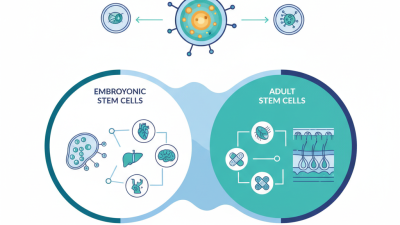
Additionally, ethical considerations in stem cell research create a complex landscape. Concerns about sourcing and application of embryonic stem cells persist. Regulations vary significantly across different regions. As China continues to expand its role in this field, addressing these ethical concerns will be crucial for fostering international collaboration and trust. The journey forward will require both expertise and reflection to navigate these intricate challenges in stem cell science.
Ethical Considerations and Regulatory Frameworks in China's Stem Cell Research
China has made notable strides in stem cell research. However, these advances must be balanced with ethical considerations. The rapid progress prompts a need for regulatory frameworks that ensure safe and responsible practices. Researchers in China are increasingly aware of the potential ethical dilemmas that arise from stem cell applications. There is a fine line between innovation and moral responsibility.
The Chinese government has laid out guidelines to govern stem cell research. These regulations prioritize patient safety and informed consent. Researchers must navigate complex scenarios, where potential benefits and ethical implications can clash. There is ongoing debate about how to assess the value of stem cell interventions. Some advocate for more stringent ethics reviews, emphasizing the need for transparency in trials. This is crucial for building public trust in scientific advancement.
Despite the progress, challenges remain. Unregulated practices still exist, raising concerns. Some researchers may prioritize results over ethics, breaching guidelines unintentionally. Future regulations must adapt to keep pace with scientific innovations. Creating a culture of ethical awareness in stem cell research is essential for sustainable growth. Balancing innovation with ethics is an ongoing journey in this promising field.