Best Stem Therapy Solutions for Effective Healing?
Stem therapy has emerged as a promising solution for various health conditions. This innovative treatment harnesses the body's own healing capabilities. By utilizing stem cells, it aims to repair damaged tissues and enhance recovery processes. Many patients seek stem therapy for issues like chronic pain, joint disorders, and even neurodegenerative diseases.
With advancements in medical science, more clinics are offering stem therapy. However, not all therapies are created equal. It's crucial to identify reliable providers that offer FDA-approved treatments. The complexity of stem cell applications can lead to varying results, making patient education essential.
While numerous success stories exist, some experiences raise questions. For instance, not every patient responds positively to stem therapy. Understanding the potential risks and limitations is vital for informed decision-making. Exploring the best stem therapy solutions requires a balanced approach, combining hope with realistic expectations.
Understanding Stem Cell Therapy: Definition and Mechanisms of Action
Stem cell therapy is reshaping modern medicine. It involves using stem cells to treat diseases. These cells can differentiate into various cell types. They also have the potential to repair damaged tissues. According to a report by Grand View Research, the global stem cell market is expected to reach $119.3 billion by 2025. This growth reflects increasing interest in regenerative medicine.
The mechanisms of action in stem cell therapy are complex. Stem cells can release growth factors. These factors promote healing and tissue regeneration. For instance, studies show that stem cells play a role in reducing inflammation. A research paper published in the Journal of Cell Biology indicates that stem cells can improve recovery from conditions such as heart disease and spinal cord injuries. However, challenges remain. Researchers still struggle with standardizing treatments across different patients.
Understanding these fundamental aspects of stem cell therapy is crucial. There are ethical concerns surrounding stem cell use that require careful consideration. Some treatments are still experimental. Thus, patients must be well-informed before pursuing these options. The science of stem cell therapy continues to evolve. Yet, it holds promise for effective healing across various medical conditions.
Key Types of Stem Cells Used in Therapeutic Applications
Stem cells are a promising area of research in regenerative medicine. They have unique abilities to develop into various cell types. This makes them crucial for therapeutic applications. Different types of stem cells play specific roles in healing processes.
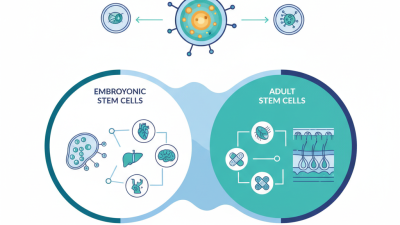
Embryonic stem cells are versatile. These cells can become any cell type in the body. They are often studied for their potential in treating conditions like spinal cord injuries and degenerative diseases. However, ethical considerations surround their use, which creates a need for balanced discussions.
Adult stem cells, found in tissues like bone marrow, offer another avenue for therapy. They help repair and regenerate damaged tissues. While they are less versatile than embryonic stem cells, adult stem cells come with fewer ethical concerns. Researchers are exploring their application in diseases like leukemia and heart conditions. Challenges remain in optimizing their use. The effectiveness of stem cell therapies depends on various factors, including sourcing and processing methods. Understanding these nuances is essential for progressing in this field.
Evidence-Based Benefits of Stem Cell Therapy in Disease Management
Stem cell therapy is gaining recognition for its potential in disease management. Research shows that it can facilitate healing and regeneration in various conditions. For instance, stem cell treatments are currently explored for joint injuries, neurological disorders, and even certain heart diseases. These therapies leverage the body's natural healing processes, offering hope for patients who have exhausted other options.
However, the promise of stem cell therapy does carry some challenges. Not every case leads to success. Results can vary significantly between individuals, and rigorous clinical trials are ongoing. It's crucial for patients to work with qualified professionals who understand the nuances of stem cell applications.
When considering stem cell therapy, communication is essential. Discuss all potential risks and benefits with your healthcare provider. Keep an open mind about the outcomes, as results can be unpredictable. Staying informed about new research will help in making educated decisions. Understanding your condition and the therapy’s role is key to managing expectations.
Current Industry Trends and Innovations in Stem Cell Therapy Solutions
The field of stem cell therapy is rapidly evolving, driven by advancing technologies and a deeper understanding of regenerative medicine. Recent reports indicate that the global stem cell market is projected to reach $18 billion by 2026, growing at a compound annual growth rate (CAGR) of 9.5%. This growth reflects increased investment in research and development, as well as rising clinical applications across various medical fields, including orthopedics, neurology, and oncology.
Innovations such as induced pluripotent stem cells (iPSCs) are reshaping the landscape. These cells, derived from adult tissues, can differentiate into any cell type, paving the way for personalized medicine. A recent study highlighted how iPSCs could effectively treat conditions like Parkinson's disease. However, challenges remain, such as ensuring the safety and efficacy of these treatments over time. While promising results are emerging, variability in patient responses needs careful consideration.
Moreover, the rise of regulatory frameworks is crucial. These regulations aim to ensure that stem cell therapies are both safe and effective. For instance, the expanded roles of agencies such as the FDA are indicative of the systematic approach needed in this rapidly growing field. Despite these advancements, there is still much to learn about long-term outcomes and ethical implications. Continuous dialogue among experts is vital to navigate these complexities.
Best Stem Therapy Solutions for Effective Healing? - Current Industry Trends and Innovations in Stem Cell Therapy Solutions
| Solution Type |
Application Area |
Efficacy Rate (%) |
Latest Innovation |
Industry Trend |
| Autologous Stem Cell Therapy |
Orthopedics |
80% |
3D Bioprinting of Cartilage |
Increasing Personalized Solutions |
| Allogeneic Stem Cell Therapy |
Hematology |
75% |
Enhanced Cryopreservation Techniques |
Broader Access to Treatments |
| Induced Pluripotent Stem Cells (iPSCs) |
Cardiology |
85% |
Genetic Engineering for Cardiac Repair |
Regenerative Medicine Advancements |
| Mesenchymal Stem Cells (MSCs) |
Neurology |
70% |
Targeted Delivery Systems |
Focus on Neurodegenerative Disorders |
| Umbilical Cord Blood Stem Cells |
Immunology |
78% |
Novel Expansion Techniques |
Increasing Use in Transplantation |
Regulatory Challenges and Ethical Considerations in Stem Cell Research
Stem cell research holds great promise for healing and regeneration. However, navigating the regulatory landscape remains complex. Different countries have varying laws concerning stem cell use. These regulations often arise from ethical concerns about the origin of stem cells and their potential uses. In many regions, the use of embryonic stem cells is heavily restricted, raising debates regarding life and consent.
Ethical considerations are crucial in this field. Researchers often grapple with balancing innovation and morality. Informed consent from donors is essential, but it can be challenging. The complexity increases when considering how to ensure that patients benefit from advancements without exploitation. Addressing disparities in access to stem cell therapies further complicates the landscape.
Despite progress, transparency is sometimes lacking. This can lead to mistrust among the public. Ongoing dialogue among scientists, ethicists, and regulators is necessary. Continuous reflection on past missteps in medical research can guide future endeavors. Harnessing the potential of stem cells requires an ethical framework that aligns with societal values.
Best Stem Therapy Solutions for Effective Healing
This chart illustrates the effectiveness of different stem therapy solutions across various categories. The data includes treatment types and their reported success rates in clinical studies.